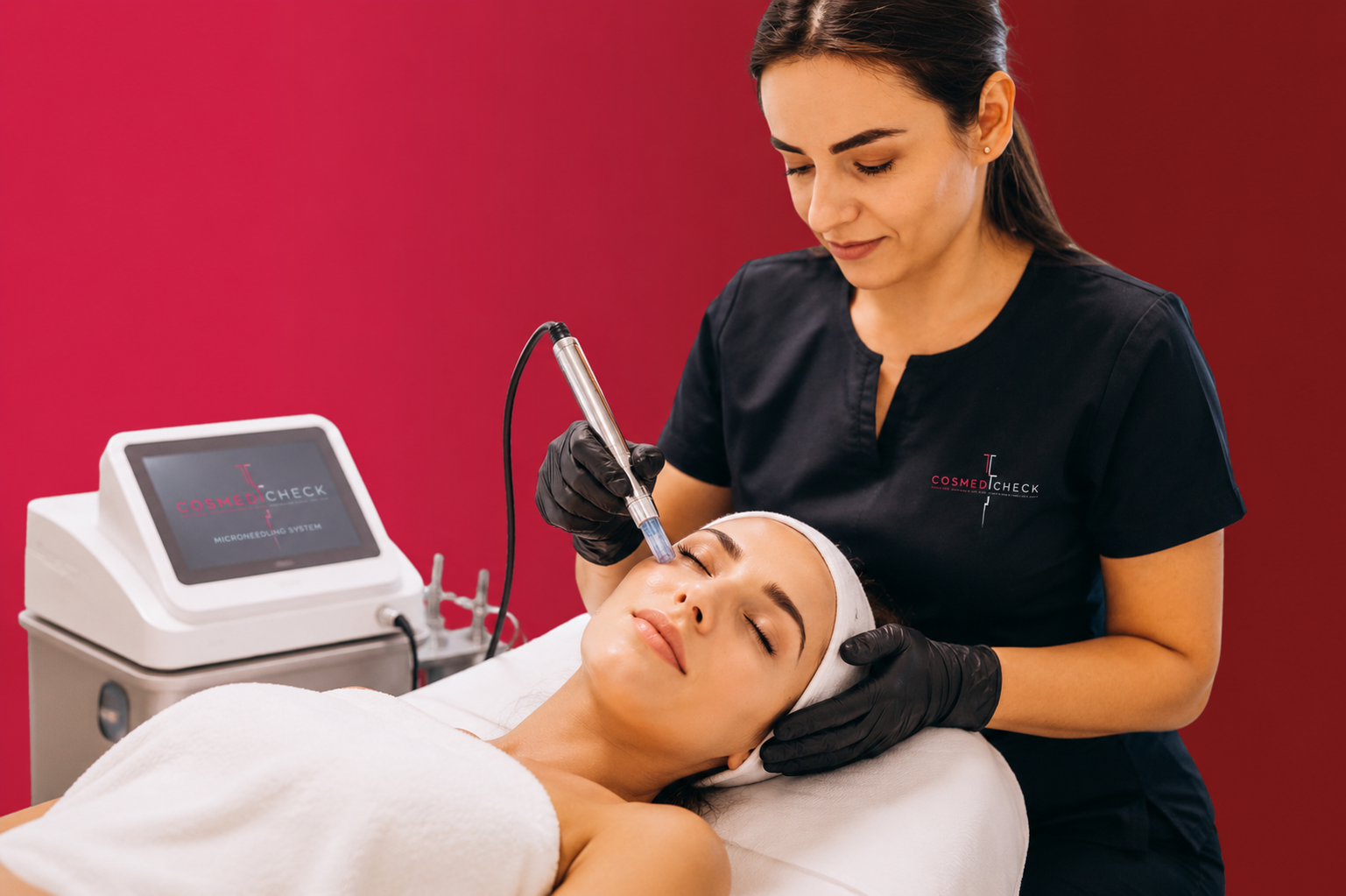
Cosmetic Treatments in Summer: What Clients Need to Know Before Booking
Summer is the season most people want to look and feel their best. It's also the season where the difference between a thoughtful cosmetic professional and a careless one shows up most clearly on your skin. Here's what a good consultation should cover before you book.

Cosmetic Treatments in Summer: What Clients Need to Know Before Booking
Summer is the season most people want to look and feel their best. It is also the season when cosmetic treatments carry a different set of considerations than they do in cooler months. The sun, the heat, the swimming, the holidays, and even the medications you might be taking for unrelated reasons can all change how your skin responds to a treatment.
This article explains what actually changes in summer, why it matters when you are choosing a treatment, and the single most important thing you can do to protect your outcome.
Why summer changes the risk calculus
In cooler months, your skin spends most of its time covered, indoors, and at a relatively stable temperature. In summer, several things shift at once.
Sun exposure increases, even when you are not trying to tan. Walking to the shops, sitting in a garden, driving with the window down - all of it adds up. Many cosmetic treatments make your skin temporarily more sensitive to UV light. If your professional has not factored that into their plan with you, the result can range from uneven pigmentation to longer recovery to outcomes that look different from what you wanted.
Heat and humidity affect healing. Inflammation, swelling, and redness are part of the normal response to many treatments. Heat tends to make those responses last longer or feel more pronounced. Sweating can interfere with the skin's natural recovery, particularly for treatments that affect the surface layer.
Your routine probably looks different. Holidays, swimming pools, the sea, outdoor exercise, and changes in skincare all matter more in summer than they do in winter. A treatment plan that works around your real life is more likely to give you the result you want.
Medications can interact with sun exposure. Some prescription medications - for acne, for blood pressure, for various other conditions - increase sun sensitivity. A professional who does not ask about your medication during the consultation is missing a piece of information that could materially change what they recommend.
None of this means summer is the wrong time for cosmetic treatments. It means summer is the wrong time to choose a professional who is not asking the right questions.
What a thorough consultation should cover in summer
If you take one thing from this article, take this: the consultation is the part of the process that protects your outcome. Not the treatment itself. The conversation that happens before it.
A professional who is genuinely qualified to treat you in summer will want to understand:
- Your skin type, ancestry, and how your skin has historically responded to sun.
- What treatments you have had before, when, and how you healed.
- Any medication you are currently taking, including over-the-counter products.
- Your skincare routine and any active ingredients you use (retinoids, acid exfoliants, vitamin C, and others all matter).
- Your holiday and travel plans for the next few months.
- Whether you swim regularly, and where (chlorinated pools, the sea, and freshwater all behave differently on healing skin).
- What outcome you are hoping for, and what would count as a disappointing result.
If your consultation does not cover these things, that is information about the professional, not about you. A consultation that is essentially a sales conversation is not a consultation.
What you should expect to be told (not just asked)
A good consultation is a two-way exchange. Alongside the questions, your professional should give you clear, specific information about:
- Whether the treatment you are considering is the right choice for your skin and your goals, or whether something different would suit you better.
- What the realistic range of outcomes looks like, including what cannot be promised.
- The aftercare you will need to follow, and how that fits with your real summer plans.
- Whether the timing should be adjusted (some treatments are genuinely better suited to autumn or winter, and a professional acting in your interest will tell you so).
- What to do, and who to contact, if anything does not feel right after the treatment.
If a professional is unwilling to delay or decline a treatment when the timing is wrong for your circumstances, that is a meaningful signal about how they will handle the rest of the process.
Why verification matters more in summer
The cosmetic and aesthetics industry in the UK is not regulated in the way that, for example, dentistry is. Anyone can call themselves a cosmetic professional. Qualifications, training, and insurance vary enormously between professionals. From the outside, it can be very difficult to tell who is genuinely qualified and who is not.
This matters in every season. It matters more in summer, because summer is when the consequences of poor advice are most likely to show up on your skin.
CosmediCheck is an independent verification platform. We verify cosmetic and aesthetics professionals against more than 30 standards across two pillars: qualifications and insurance. Verification is independent of any individual professional or clinic, which is what makes it meaningful. A professional who has been verified has had their credentials checked by a third party that has no commercial interest in their bookings.
When you search for a verified professional through CosmediCheck, you are not browsing a list of clinics that paid to be listed. You are looking at professionals who have agreed to be checked against a set of standards that are published openly on our website. That is the difference between a directory and a verification platform.
What to do before booking a summer treatment
A short, practical sequence:
- Decide what you want to achieve, in your own words. Do not let a clinic define the outcome for you.
- Find a verified professional through CosmediCheck.
- Book a consultation, not a treatment. The consultation is the decision point.
- Use the questions in the section above as a checklist for what your consultation should cover.
- If anything about the consultation feels rushed, dismissive, or overly focused on closing a sale, take that as information. There are other verified professionals.
- Once you have chosen a professional you trust, follow their specific aftercare advice. Generic aftercare advice from the internet is not a substitute for guidance from someone who has assessed you in person.
A final word on summer
Summer is a good time to feel good about how you look. It is also the season where the difference between a thoughtful professional and a careless one shows up most clearly.
The professionals who will treat you well in summer are the ones who are willing to ask more questions, take more time, and sometimes recommend that you wait. Verification is the most reliable way to identify those professionals before you book, rather than after.
If you are considering a treatment this summer, search for a verified professional on CosmediCheck.